
SEO
Generating backlinks with AI tools: How to build a successful linkbait
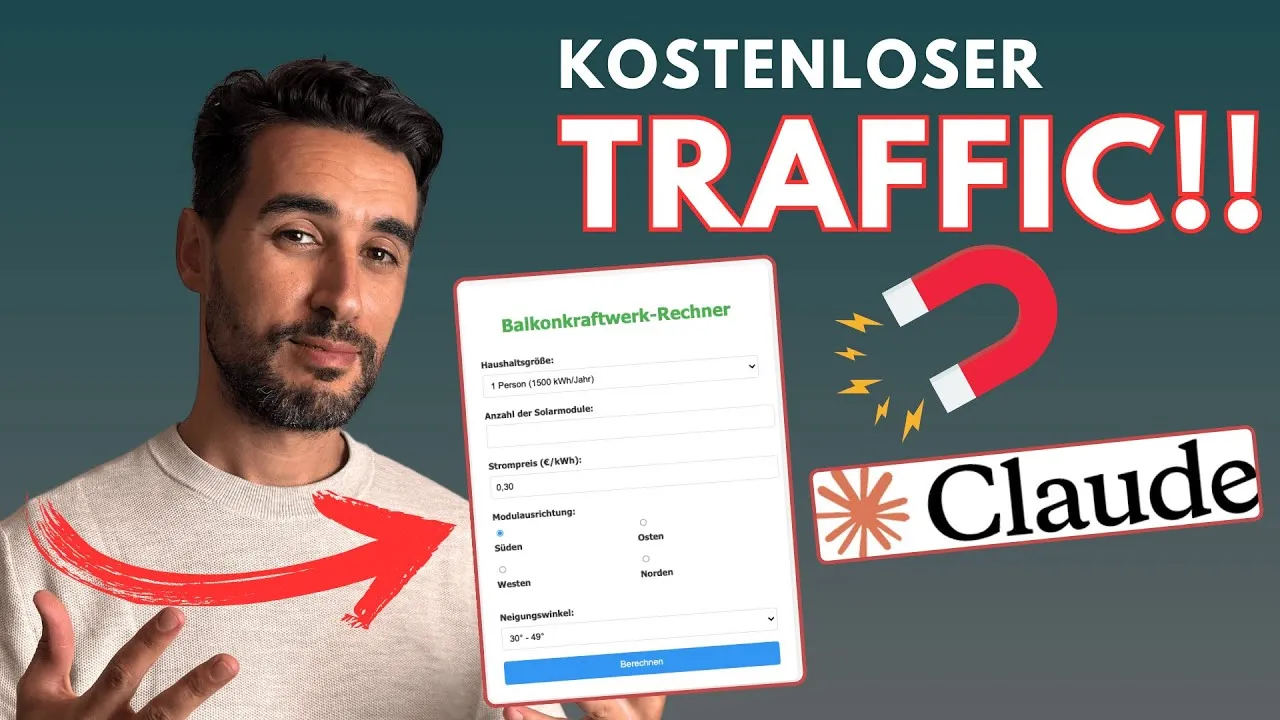 Video in German
Do you want to bring more traffic to your website? A simple and effective way to do this is to create a useful tool with the help of artificial intelligence (AI). A tool like this can act as linkbait, which means that other websites link to your tool because they find it helpful for themselves and their users. This generates more backlinks and improves your SEO ranking. In this article, I will show you how to use AI to develop a tool tailored specifically to your target audience and how to implement it step by step.
What is a linkbait tool?
A linkbait tool is an application on your website that is so valuable or useful that other websites link to it. Examples are calculators, generators or analysis tools that solve specific problems for the target audience. They offer real added value that not only attracts users but also encourages links from other sites, a decisive factor for search engine rankings.
Why tools matter for SEO
Search engines favour web pages that offer high relevance and useful content. Tools that solve problems or carry out useful calculations increase not only the time users spend on the page, but also the likelihood that the page gets linked. Backlinks are one of the most important factors that improve your Google ranking. A tool that is recommended on many websites can give you a considerable SEO boost.
Step-by-step guide: How to create a linkbait tool with AI
1. Find a niche and define the tool
The first step is to identify a specific problem that your target audience wants to solve. Think about your industry and which tools or calculators are often searched for. In our example, it was a balcony solar calculator (Balkonkraftwerk-Rechner, for plug-in mini solar systems) for the solar industry, but the idea can be applied to almost any niche.
Here are some examples:
- Finance: Tax calculator, loan calculator
- E-commerce: Shipping cost calculator, discount code generator
- Health: Calorie calculator, BMI calculator
- Marketing: SEO analysis tool, keyword generator
Choose a niche that is closely connected to your website and where there is less competition.
2. Use AI to create the code
Once you have the idea for your tool, you can use AI tools such as Claude or ChatGPT to create the code the tool needs. These platforms can help you generate HTML, CSS and JavaScript to integrate the tool into your site.
Example request to the AI:
“Create HTML, CSS and JavaScript code for [tool type]. It should look minimalist and modern.”
The AI will generate code for you that you can then easily adjust. For example, you can use Claude to see directly in the editor how the tool looks and works.
3. Test and adjust
Once you have the code, you should test and adjust the tool. If necessary, give the AI additional instructions to adjust parameters such as usability, colours and calculations. Make sure the tool is easy to use and offers the added value you want.
4. Embed the tool on your website
Once you have created the tool, you can easily implement it on your website, especially if you use a content management system such as WordPress. Add the tool in an HTML block by copying the generated code into your post or onto a dedicated page.
Steps for WordPress:
- Go to the page editor of your WordPress site.
- Add an HTML block.
- Paste the code and save the changes.
- Test the page to make sure the tool works correctly.
5. Optimise the tool for SEO
For your tool to generate more traffic, it is important to optimise the page it sits on for SEO. This includes:
- Relevant meta tags: Use keywords in the title and meta description that match your tool. Example: “Balcony solar calculator: Calculate your power yield online”.
- Internal links: Link to your tool from other relevant pages on your website to increase traffic and visibility.
- Build backlinks: Share your tool on social media, in forums and with influencers in your industry. The more other websites find your tool helpful, the more likely they are to link to it.
6. Add extra features
The more useful and specific your tool is, the more likely it is to be shared and linked. Consider whether you can add extra features that set it apart from other similar tools. These include advanced calculation options, individual customisation or a particularly appealing design.
Example: The balcony solar calculator
To show what the process looks like in practice, let’s take the example of a balcony solar calculator. Demand for these calculators is high, as more and more people want to install their own mini solar systems. Here is a step-by-step guide to how we built this calculator:
- Research: We found that the keyword “Balkonkraftwerk Rechner” (balcony solar calculator) is searched for often and is relatively easy to rank for.
- Tool request to Claude: We asked Claude to create HTML, CSS and JavaScript code that calculates the power yield of a balcony solar system.
- Adjusting the parameters: To make the calculator user-friendly, we added parameters such as power consumption, the number of solar modules and the module orientation.
- Testing and optimisation: The calculator was tested and adjusted to make sure the results are accurate and easy to understand.
- SEO optimisation: The page was optimised with relevant keywords such as “Balkonkraftwerk Rechner”, and internal links were added to increase traffic.
Conclusion
With a useful tool that works as linkbait, you can significantly increase the traffic to your website and improve your SEO at the same time. Thanks to AI tools such as Claude or ChatGPT, it is easier than ever to develop a tool like this and implement it on your website. The key to success is to create a tool that is useful for your target audience and to make it known through SEO optimisation and targeted promotion.